Mobile App Development Pricing and Timelines in Bhubaneswar
Mobile app development in Bhubaneswar costs vary by platform, features, design, backend work, integrations, testing, and maintenance. A simple app needs less work than a full Android and iOS product with payments, live data, or admin tools. Timelines can range from several weeks to a few months. They depend on the project scope and approval speed. App development in India follows similar cost factors. Local communication, team size, and support plans can affect the final estimate. Thinkwebhub can review your needs and prepare a scope-based proposal.
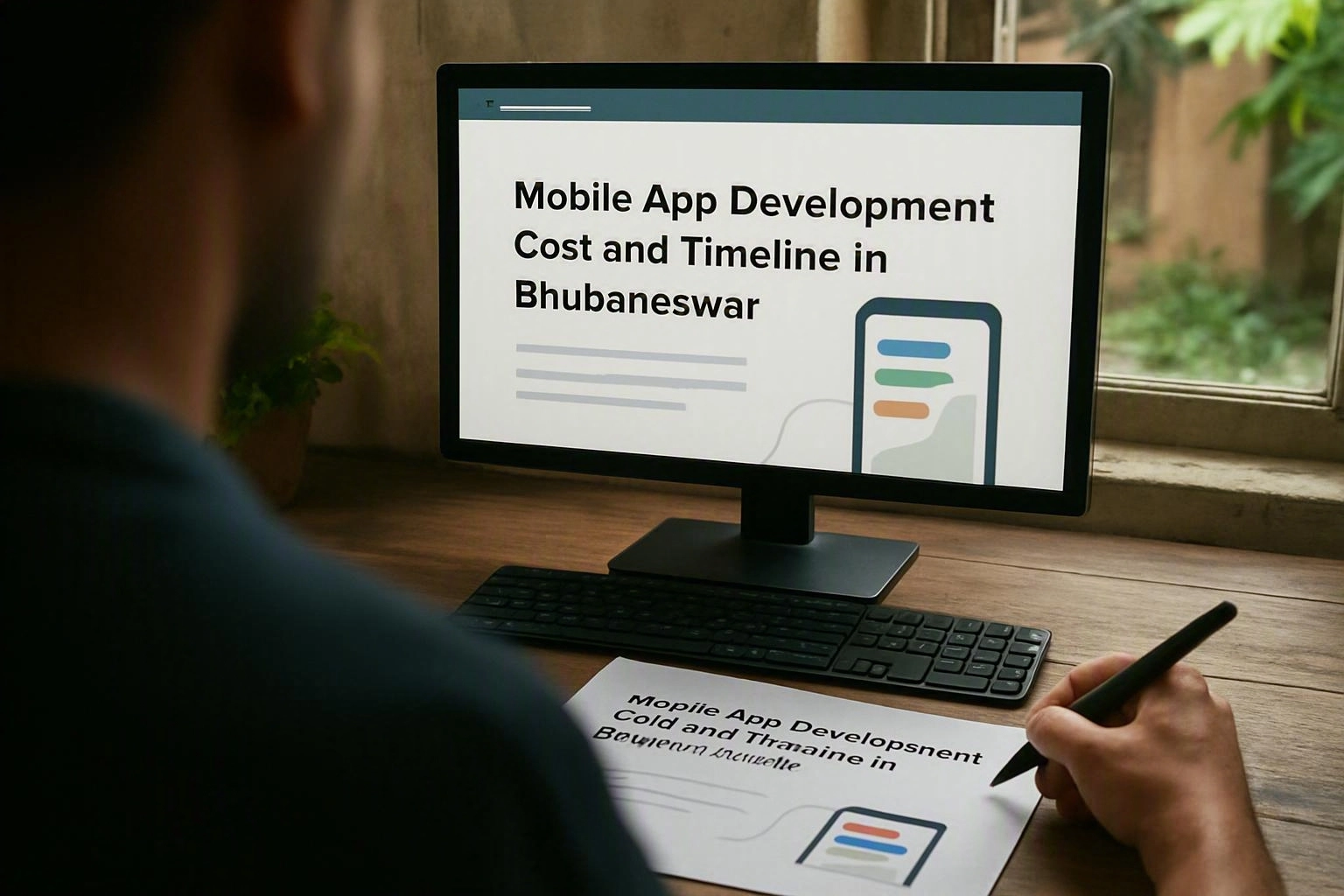
Mobile app development costs and timelines depend on the platform, features, technical work, team, and maintenance. This guide helps businesses plan software development with a clear scope instead of an unclear package price.
Author: Debasis Sahoo
How Much Does Mobile App Development Cost in Bhubaneswar?
Mobile app development cost in Bhubaneswar depends on the platform, interface, backend, integrations, testing, and support. A basic business app usually needs fewer resources than a marketplace, booking platform, or live service. We estimate projects from listed features, not from a generic package price.
Start by explaining the business problem, target users, and expected result. A school might need admissions, notices, attendance, and parent messages. A healthcare provider may need bookings, records, reminders, and privacy controls. Retail, hospitality, and service companies may need catalogues, orders, reservations, maps, or payments. These needs shape the project brief.
An Android application and an iOS application can follow the same product idea. Still, each platform needs its own design checks, publishing accounts, device tests, and technical choices. Custom software development also takes more work when users have different roles. These roles may include customers, staff, managers, and administrators.
Interface work covers user interface design, user experience planning, wireframes, visual elements, accessibility, and content. Backend development may cover login, databases, reports, notifications, file storage, and API integration. Every new workflow needs planning, coding, testing, and approval.
The Bhubaneswar mobile app development market includes local teams, freelancers, national providers, and outsourcing partners. Local communication can make requirement meetings easier. However, unclear ownership of content, approvals, payment accounts, API keys, and technical access can delay any project.
A useful estimate should list the platform, screens, user roles, integrations, security needs, test devices, launch tasks, and support period. Focused projects often take several weeks to a few months. This range is only an example, not a promise. The final mobile software development cost should follow the approved scope.
How App Development Cost in India Compares with Bhubaneswar?
India app development cost and Bhubaneswar estimates use the same main factors. These include scope, platform, complexity, integrations, quality, and support. A software development team may include an analyst, designer, frontend developer, backend developer, tester, project manager, and deployment specialist.
Developer rates can change based on experience, skills, availability, and the working arrangement. Outsourcing can offer access to more specialists. A local team can make workshops and daily discussions easier. Neither option is always cheaper after delays, rework, communication gaps, and poor documentation.
Compare proposals by deliverables, assumptions, exclusions, milestones, and source-code ownership. A small team may suit a focused minimum viable product. A complex product needs wider technical support. The scope should also name who handles testing, app store submission, security reviews, and maintenance.
What Is Included in Mobile App Development Cost?
Mobile app development cost often includes requirements, user interface and experience design, frontend coding, backend services, database setup, integrations, testing, deployment, and an agreed support period. The estimate should list the platforms, features, revisions, security controls, third-party services, and maintenance tasks included. This helps prevent confusion when the scope changes.
The table below lists common delivery parts. Each part should have a clear output and approval point.
| Component | Typical inclusion | Scope questions |
|---|---|---|
| Requirements discovery | Goals, users, workflows, roles, and technical assumptions | Who approves requirements and content? |
| UI UX design | User journeys, wireframes, visual design, and prototypes | How many screens and revision rounds are needed? |
| Mobile app development | Frontend interface, navigation, forms, permissions, and device behaviour | Which platforms and devices must be supported? |
| Backend API and database | Authentication, data models, server logic, storage, and API integration | Are existing systems or payment services available? |
| Quality assurance | Functional, usability, performance, security, and device testing | What acceptance criteria define a successful release? |
| App store deployment | Build preparation, store content, submission, and release support | Who owns developer accounts and store assets? |
Website security and maintenance may not be part of the first build. This depends on the proposal. Before work starts, define backups, access controls, security issues, monitoring, system updates, bug fixes, and response times.
What Factors Change the Cost of a Mobile App?
App complexity, platform choice, feature depth, integrations, security, and maintenance are the main cost factors. A cost plan should connect each factor to a clear task. It should also list needed items, such as workflows, API documents, content, branding, compliance details, and service accounts.
Local conditions matter too. Businesses should review mobile connection quality, device variety, payment tools, data protection, and security testing. These needs matter most when an app supports many devices or handles private information.
| Factor | Why it changes the cost | What to prepare |
|---|---|---|
| App complexity | More roles, rules, screens, and live actions need more planning and coding. | User journeys, workflow rules, and role permissions |
| Platform strategy | Separate Android and iOS builds add design, coding, and testing work. | Target users, devices, operating systems, and launch priorities |
| Feature set | Payments, chat, maps, alerts, reports, and offline access add technical work. | Prioritised feature list and acceptance criteria |
| Third-party integration | External APIs may need licences, documents, tests, error handling, and account approval. | API documents, credentials, service limits, and test accounts |
| Data security | Sensitive data needs stronger access, encryption, logs, testing, and recovery controls. | Data map, retention rules, privacy needs, and security expectations |
| Maintenance requirements | Updates, monitoring, support, fixes, and device compatibility continue after launch. | Maintenance budget, response needs, ownership, and release process |
A reusable design system can reduce repeated interface work. It shouldn't replace user research or accessibility checks. Good preparation helps our team separate launch needs from later updates. It also gives decision-makers a clearer budget.
How Long Does It Take to Develop a Mobile App?
Mobile app development timeline depends on discovery, design approval, feature complexity, platform count, backend work, testing, and client feedback. A focused minimum viable product can launch faster than a multi-platform product with payments, live features, and complex admin tools. Clear requirements and quick approvals usually prevent avoidable delays.
The discovery phase defines users, business rules, risks, content, and success measures. Wireframes show the main screen structure before visual design begins. Sprint planning then divides approved work into smaller cycles. This lets the team review progress without changing the whole product.
Software testing runs throughout development. It doesn't happen only at the end. Teams may check functions, devices, networks, usability, security, and speed. Android device variety can require a wider test list. iOS also needs Apple-specific checks and release work.
Focused projects often take several weeks. Feature-rich products may take a few months or longer. This is a typical range, not a fixed promise. Store approval can add time when app details, privacy information, account ownership, or requested changes are incomplete.
Bhubaneswar clients can help by choosing one decision-maker and sharing content on time. Written design approvals also help. Payment and API access should be ready early. Local meetings can clarify workflows, but team availability and support handover still affect the schedule.
Android or iOS: Which App Development Option Is Cheaper?
Android development or iOS development isn't always cheaper. Android may need testing across more devices and system versions. iOS has more controlled hardware, but it still needs Apple design checks, account setup, and review. Cross-platform development can reduce repeated work when shared code suits the product.
Android may be a good first choice when users have many device types. It can also suit a business plan built around Google Play. iOS may fit an Apple-focused audience or an existing Apple customer base. The choice should follow user demand, not price assumptions.
A cross-platform app can share much of its code across both systems. This may reduce repeated development. However, special platform features, animations, hardware access, alerts, and speed needs may still require native code. Representative devices must still be tested.
Both the Apple App Store and Google Play have account, content, privacy, review, and release rules. Estimates should include store assets, submission, account access, review replies, and post-launch fixes. Our team can compare Android, iOS, and shared-code options for your audience and features.
Five Ways to Control Your Mobile App Budget
Businesses can control app budgets by starting with a minimum viable product and listing workflows before coding. Choose platforms based on user demand. Reuse approved design parts and test integrations early. Keep launch work separate from future updates. A written change process also stops new requests from quietly increasing the scope.
Budget control doesn't mean cutting important quality checks. It means deciding what must be ready at launch. Some features can be tested with a smaller audience. Others can wait for a later release.
Early API checks help with payments, maps, messaging, identity tools, and business software. They can show account, licence, data, or technical limits before the main build begins.
How to Plan a Reliable App Development Estimate?
A reliable app estimate starts with a written project brief, user journeys, platform choice, feature priorities, technical details, milestones, acceptance rules, and support needs. Compare proposals by deliverables and exclusions, not price alone. We can use this information to plan app development, web design, security, and maintenance.
Use this sequence before requesting a proposal:
Ask who handles design, development, testing, security, deployment, and maintenance. This matters when local hiring or outsourcing changes the team. It also matters when support must continue after a developer leaves.
A practical proposal should list what the client supplies. This may include branding, copy, images, legal text, store accounts, API access, payment details, and approval decisions. A local web development company may also build a connected website or admin portal. Those items should appear separately from the mobile application.
For businesses considering App Development in Bhubaneswar, a written scope creates one shared reference. It supports local meetings and remote work. If you're ready to review your requirements, our team can discuss the next steps through the contact form.
Questions About Web Development Company
What Is the Average Cost of Mobile App Development?
There is no reliable average without knowing the platform, features, design, backend, integrations, testing, and support needs. A simple business app usually needs fewer resources than a marketplace, booking product, or live system. A written scope gives a more useful estimate than a generic package price.
How Long Does It Take to Build an App from Scratch?
A focused minimum viable product often takes several weeks. A feature-rich multi-platform product may take a few months or longer. Discovery, design approvals, backend work, testing, feedback, and store approval all affect the schedule.
What Makes an App Expensive to Develop?
Complex workflows, separate platform builds, live features, payment systems, external APIs, sensitive data, advanced admin tools, wide device testing, and long-term support can raise costs. Unclear requirements and frequent changes can also add avoidable costs.
Should I Build an Android App or an iOS App First?
Choose the first platform based on user demand, device access, business goals, features, and launch needs. Android may suit a broad device audience. iOS may fit an Apple-focused customer base. Cross-platform development can work when shared code meets performance and feature needs.
Do Mobile App Developers Charge Separately for Maintenance?
Maintenance is often priced separately unless the proposal includes a set support period. It may cover bug fixes, system updates, security checks, monitoring, backups, store releases, and small improvements. The agreement should state response times, exclusions, ownership, and larger change costs.
Good planning connects business goals with realistic features, milestones, security, and post-launch care. Our team can review your project brief and separate launch needs from future improvements.
Related Resources
Cheap Web Development Company Mistakes: What to Check Before Hiring
mistakes to avoid when hiring a cheap web development company
What to AvoidWebsite Development Project Scope Mistakes That Cause Delays and Extra Costs
common website development project scope mistakes
What to AvoidWebsite Security Mistakes Businesses Make and How to Prevent Them
common website security mistakes businesses make
What to AvoidDomain and Hosting Mistakes to Avoid for a Business Website
domain and hosting mistakes to avoid